.png?width=1000&height=199&name=SG-Logo3-Transparent-1000x199px%20(1).png "www.SchoolGrowth.com")
THE SCHOOL GROWTH NETWORK
Lead Your School With Confidence & Purpose
Expert executive coaching, retreats, strategic planning, and more to help you build authentic school excellence.
What is Effective School Leadership in 2026-27?
The growing pressures you're facing as a school leader, from shifting enrollment patterns to tech disruption, can easily force you into a state of reactive leadership. Excellent school leadership cultivates proactive planning and prioritizes three objectives:
1. Talented, Engaged Educators
2. Healthy Culture to Thrive
3. Continuous Improvement
We provide the human-centered framework you need to achieve these objectives and progress on the Journey of Excellence.
Our Services For School Leaders



Who We Are
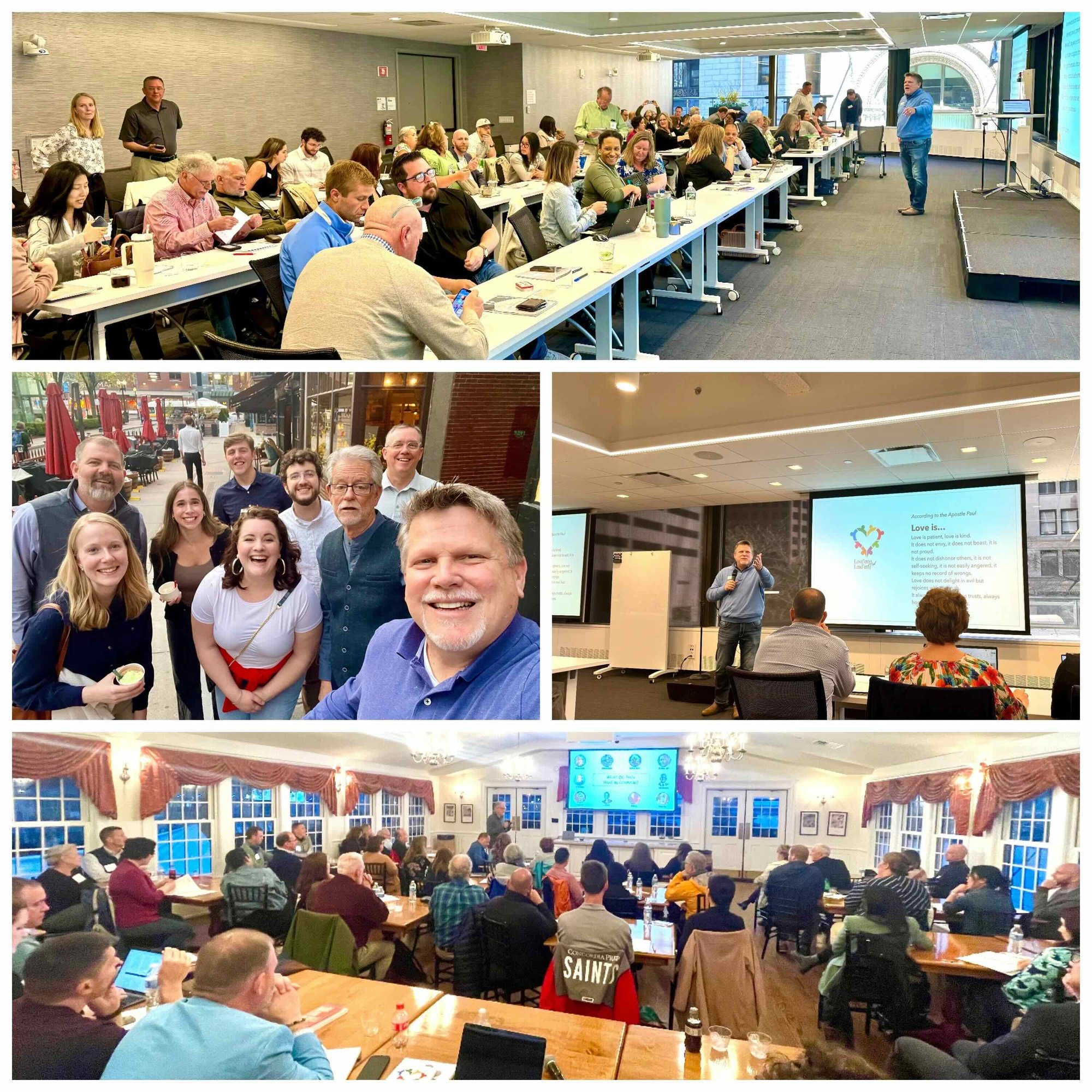
School Growth is a consulting and membership organization for school leaders, led by experienced heads and administrators who help you build authentic excellence. We walk beside school and board leaders to build healthier campus cultures, streamline operational execution, and ensure long-term enrollment and financial success.
Discover how our coaching and advisory services can transform your leadership team from the boardroom to the classroom. We start with a conversation about where your school is and where you want it to go.
★ Over 500,000 educators have benefited from School Growth's training & resources
★ Over 40,000 subscribers to the Weekly Encouragement for Educators
★ 100% longer tenure than the average school leader for School Growth Members
What Our Clients Say
When everyone looks to you for answers, leadership becomes incredibly lonely. The School Growth Network provided a safe, biweekly connection with objective counsel that helped our executive team reduce crisis management and laser focus on the variables we can control to build a healthy culture.
Rob Bridges
President, Cathedral High School (IN)
We were successful, but maintaining status quo became unacceptable. By introducing the disciplines of People, Culture, and Curriculum across our leadership, we transformed written values into practiced daily habits. Our culture is now our single greatest advantage.
Meredith Rufner
Head of School, St. Peters Episcopal School (TN)
School Growth's greatest impact is the shared leadership language they instill. They brought our team into alignment around a single operational blueprint, eliminating the internal friction that used to distract our execution and steal the joy.
Kathy Garland
CEO, Urban Pathways Charter School (PA)
School Growth helped us emphasize the true product of our school is the daily experience delivered by our educators across the campus. Their executive coaching has reduced leadership variability and elevated collaboration in our culture.
Erin Robinson
Associate Head of School, Atlanta International School (GA)
Apply to the School Growth Network
Executive Coaching
Monthly Confidential Counsel
Professional Development
Performance Mastery
Issues Resolution
Team, Board & Culture
Executive Coaching +
Team Leadership Training
Culture & Strategy Guidance
Board Development
Research & Intelligence
Team, Board & Culture +
Community-Specific Data
AI Systems Guidance
Proactive Strategy
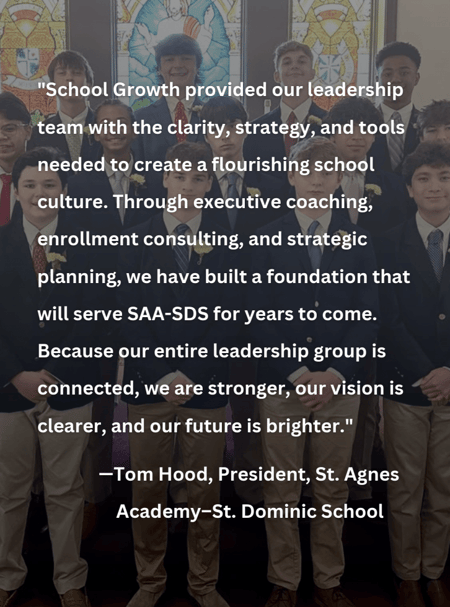
Case Study - Transforming Leadership, Culture, and Growth in a Unique Catholic School Model
St. Agnes Academy-St. Dominic School (SAA-SDS), two co-located Catholic schools in Memphis, TN, faced significant challenges to grow in a region of western Tennessee that was in the midst of complex demographic and socio-economic transitions.
Read our case study to learn how School Growth worked with SAA-SDS leadership to develop a strategic vision that would strengthen school leadership, build a thriving school culture, and ensure sustainable growth.


Subscribe to Our Weekly Encouragement for Educators
Sign up to receive weekly encouraging messages, along with updates from our research and experiences to help you grow.
Frequently Asked Questions
The product of a school is its educators, not its students. A product is something an organization can control, standardize, and stand behind. No school controls the multitude of factors that accompany every child who walks through its doors. We don't choose a student's home life, how they're wired, how they're influenced, or what they carry in each morning.
That's not dodging accountability. It's aiming more precisely. Holding a school accountable for "producing" a certain kind of student grades leaders on variables no one fully controls, and good people burn out chasing a standard they can't realistically guarantee. What a school can control, and should be held to, is the quality of its educators and the experience they create. And that's the factor that matters most: research consistently finds teachers have two to three times the effect on student learning of any other in-school factor.
So the real product is every adult who shapes the daily experience — teachers, staff, coaches, counselors, administrators, board members, and everyone else who serves within the organization. We can't change where a child comes from, but we can guarantee that the moment a student steps onto campus, they enter something that's consistently and intentionally excellent by design.
Accreditation confirms that a school satisfies certain standards. The School Growth Network confirms its leaders are living the disciplines that set new standards of excellence—every day, not once every few years. Both matter; they just answer different questions.
Accreditation and authorization are reaffirmed on roughly a five-year cycle, with the visiting team on campus for a few days. That review is useful, but excellence is achieved in the daily choices that a self-study can't reveal.
SGN Membership fills that gap, requiring commitment to practicing key disciplines that authenticate the leadership's ongoing commitment as a healthy learning organization that delivers on its promises.
Accreditation proves that a standard was met. SGN Membership signifies something more: these leaders have the integrity to set the bar higher and keep progressing on that Journey of Excellence.
Executive coaching for school leaders is a confidential, ongoing partnership with an experienced advisor who understands what it takes to lead a school. Few roles are more demanding — you hold the trust of your board, parents, faculty, and students at once, while carrying the strategic direction of the whole organization. Everyone turns to you for answers. The question few leaders can answer is: who do you turn to?
That's what this is for. Not a generic business coach, but a trusted, wise advisor who has guided schools through the same pressures you're facing and has no stake in your internal politics. That independence is the point. It gives you a place to test an idea before you act on it, name a concern you can't say aloud anywhere else, and work through the hardest decisions with someone who has seen how they play out.
It's the difference between carrying the weight alone and carrying it with someone who keeps both your school and you in clear view. That's where the courage to lead is renewed, and where the Journey of Excellence becomes something you no longer walk alone.
A School Growth retreat is a facilitated working session built around where your school is right now—we tailor the experience just for you. Some retreats focus on developing the board; others on launching a strategic plan for a new season of growth; others on strengthening your leadership team. The agenda follows your lifecycle and your goals.
Most begin with an honest evaluation, such as an organizational health assessment and a review of the historic timeline and data, so the work starts from reality, not assumption. From there, we facilitate what matters most for your team or board: building shared understanding, surfacing the issues that are easy to avoid, and strengthening the capacity to lead through the next season. The difference is the chair at the head of the table. An experienced facilitator with no stake in your politics can ask the questions an insider can't, and draw on what excellence has looked like across many other schools.
Every retreat is designed to achieve two things that outlast the day: stronger trust among your leaders, and a clear, measurable plan for what comes next.
School Growth strategic planning runs through seven stages, and it's as much professional development as it is research and design. Your leaders reflectively craft the plan, with us guiding the work. They don't hand the thinking to an outside firm and wait for an uninspired binder.
It begins with a two-day leadership retreat that sets the tone and pace for everything after. The longest stretch comes next: data collection and market analysis, the honest read of where your school actually stands. From there, the plan gains momentum as the pieces take shape — the strategic context, your vision and story, the focused priorities that matter most, and the financial strategy to resource them.
The seventh stage is the one most planning processes skip. We don't just hand over a finished document and a set of slides. We help you build engagement: explaining the plan, earning the confidence of the people it affects, and drawing your whole community into achieving results. Our strategic planning is a series of curricular experiences that strengthens your team and gives clarity to your future.
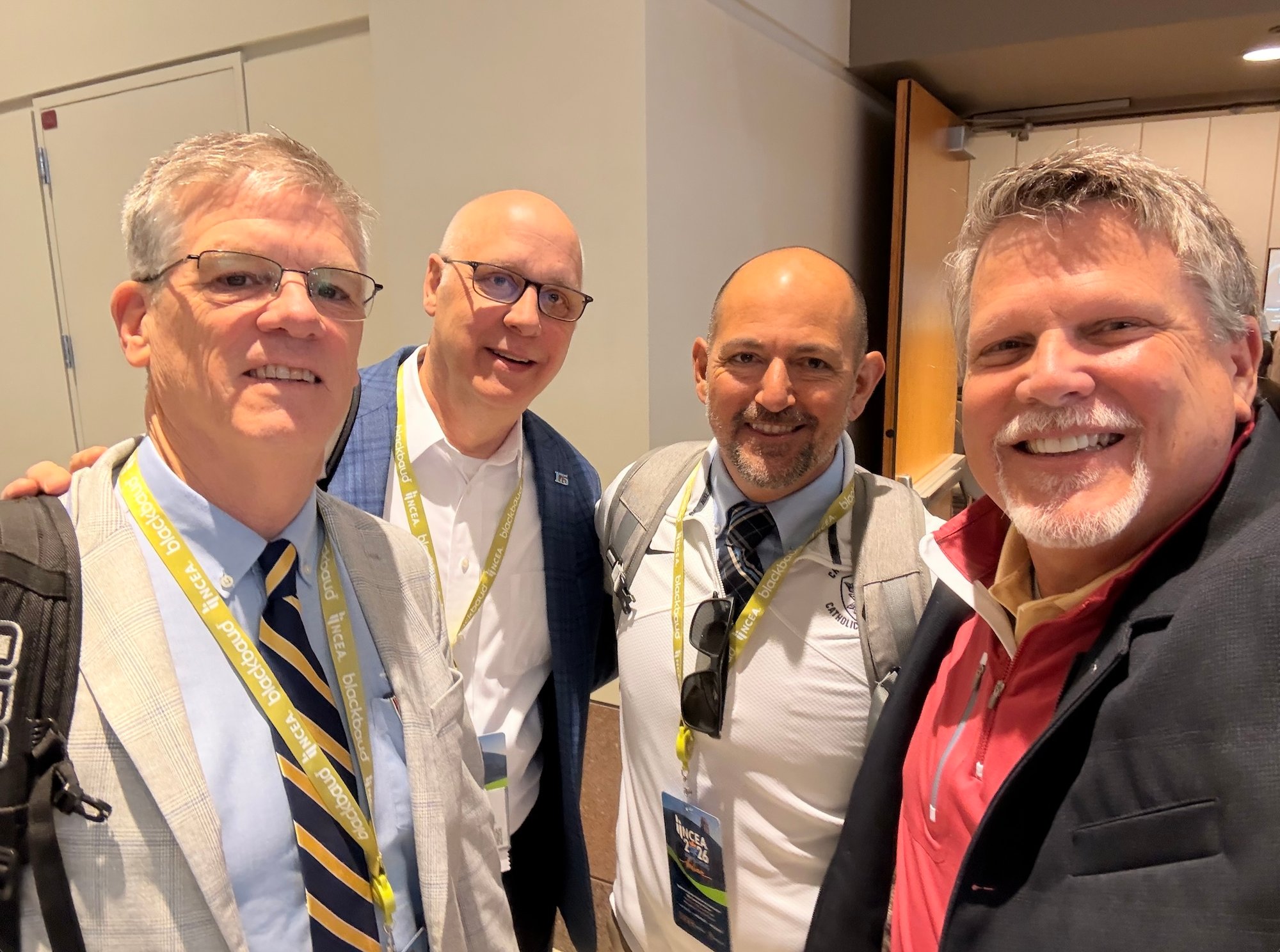
School Growth was founded by Scott Barron in 2008 after more than 20 years of leadership in educational technology and school administration. He built the company on a specific conviction: that schools don't grow through a program or a quick fix, but through the wisdom and courage of people who lead them.
Education grows more competitive and more complex, and his insight was that a school's future rests on the strength of its talent and the quality of its leadership. Grow those, and student achievement follows. This trend will continue as more leaders discover the powerful benefits of growing as a healthy learning organization that authentically delivers on its promises.
Start with a conversation. We call it a free evaluation call, and it's exactly what it sounds like—a candid, no-pressure conversation about where your school is, what's pressing on you right now, and whether we're the right fit to help. No preparation required, and no commitments.
That conversation is also how we find the right starting point, because it isn't the same for every school. Some leaders begin with executive coaching—a confidential thinking partner for the person carrying the weight at the top. Others start with a Team & Culture focus, when the work is strengthening the whole leadership team, not just the leader. And some begin with a leadership retreat, when a school is entering a new season and needs to set its direction together.
You don't have to know which one fits before you reach out. That's what the conversation is for. The best first step is simply to take it.
The Three Vital Variables are the three factors shaping student growth that a school controls completely: its people, its culture, and its experience. A school can't choose a student's home life or what they carry through the door each day. These three are owned entirely, so this is where a leader's attention and priority belong.
People — the Living Curriculum. Every adult in a student's day is teaching, whether they mean to or not. Teachers and coaches, yes — but also the counselor, the administrator, the custodian, the board member. What a student absorbs first is who the adults around them are, and how well they do their work.
Culture — the Lived Curriculum. Culture is what a school does day after day, not what it says it values, and students learn the real version by living inside it. The shortcuts a school tolerates get absorbed just as thoroughly as the standards it keeps.
Experience — the Taught Curriculum. This is everything a school sets out to teach on purpose: the academic program and the co-curriculum, delivered through the programming, practices, and policies that keep quality from drifting school-wide.
The discipline of great leadership is consistency across all three — building them strong, then refusing to let them slip. Excellence that shows up in one classroom but not the next isn't yet excellence.
Cultivate an Environment of Trust Across Your Campus
Sustaining organizational alignment and cultural joy requires more than executive policy—it requires a shared philosophy among the educators throughout your campus.
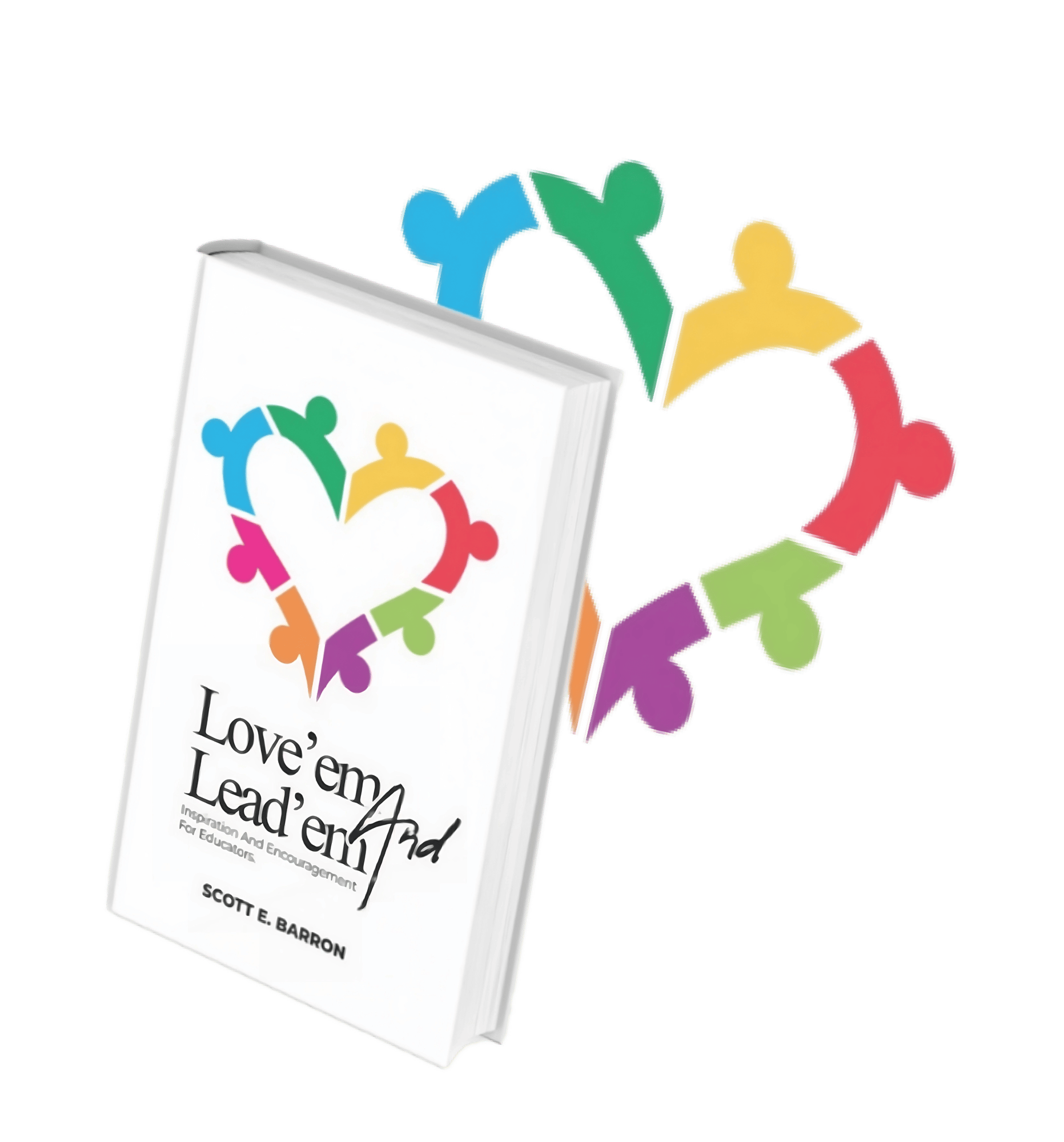
Written by Scott Barron, the CEO of School Growth, Love’em and Lead’em: Encouragement and Inspiration for Educators is designed as a practical resource for your communications and meetings. It provides deep perspective and guidance for healthy conversations about faithful leadership, helping your team navigate complex challenges while staying fiercely on mission.
Whether read individually for personal clarity or utilized for professional development, it serves as your guide to leading with courage and keeping the joy in your calling.