.png?width=1000&height=199&name=SG-Logo3-Transparent-1000x199px%20(1).png "www.SchoolGrowth.com")
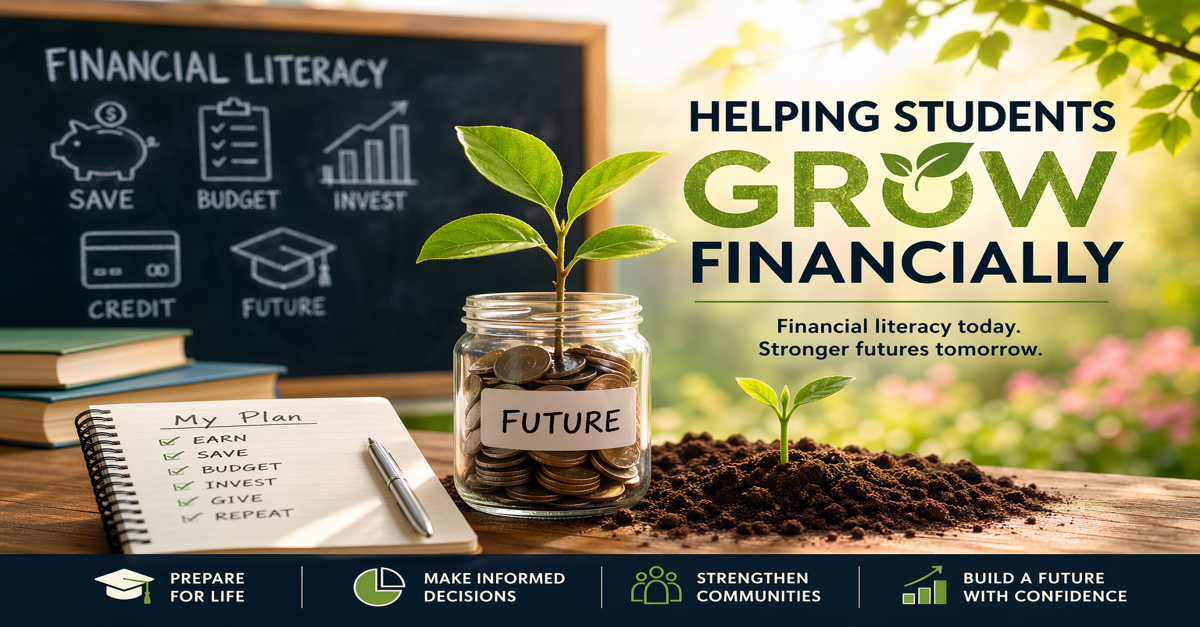
Every spring, we talk about growth.
We celebrate what is blooming, what is emerging, and what is being prepared for the season ahead. In schools, we do the same thing academically. We measure progress, celebrate milestones, and push students toward graduation, college, careers, and adulthood.
But there is one area of growth we can no longer afford to treat as optional: financial literacy.
That is why this moment matters.
Across the country, states are recognizing what educators, families, and employers have known for years: students need more than academic content to thrive. They need practical, real-world knowledge that helps them navigate the decisions waiting for them just beyond high school. According to the Council for Economic Education’s 2024 Survey of the States, 35 states now require students to take a personal finance course to graduate, and 28 states require economics. That means personal finance education has moved from a “nice to have” to a growing expectation in American high schools.
North Carolina is part of that movement. State law requires students to pass an Economics and Personal Finance course for graduation, and the law specifies instruction in topics such as the true cost of credit, credit cards, borrowing, insurance, taxes, homeownership, banking, and saving for retirement.
And now, in April, North Carolina is elevating the conversation even further. Governor Josh Stein has officially proclaimed April 2026 as Financial Literacy Month in North Carolina, noting that financial literacy can improve confidence, reduce anxiety, strengthen budgeting and planning, and expand economic opportunity for families and communities. That same message appears in the proclamation you shared.
This is bigger than a calendar recognition.
It is a reminder that if we are serious about preparing students for the future, we have to prepare them for the financial realities of that future too.
Why this matters now
Students are entering a world where financial decisions come fast and carry real consequences. They are making choices about college costs, career pathways, credit use, transportation, housing, subscriptions, savings, and debt—often before they have had any structured opportunity to learn how money actually works.
And when students do not get that preparation in school, they do not avoid those decisions. They just make them with less information.
That has a cost.
Research from the Federal Reserve found that state-mandated high school financial education was associated with higher credit scores and lower delinquency rates among young adults in the states studied. Other reviews have found that well-implemented financial education can reduce reliance on high-cost borrowing and improve early financial decision-making.
That matters not only for individual students, but for communities.
Because financially prepared students become adults who are better positioned to budget wisely, avoid predatory debt, build savings, and make more stable long-term decisions. Financial literacy is not just about money management. It is about agency. It is about reducing avoidable stress. It is about giving young people the tools to build a life instead of constantly trying to recover from preventable mistakes.
We should stop treating financial literacy like an add-on
For too long, schools have often treated financial literacy as enrichment, an elective, a guest speaker, or a one-week lesson tucked into another course. But the world students are stepping into does not treat it that way.
Money shapes access. It shapes stress. It shapes opportunity. It shapes whether a student can persist in college, whether a family can weather a crisis, and whether a young adult can move from surviving to stabilizing to building.
That is why this work belongs in schools.
Not because schools should do everything, but because schools are one of the few places where we can ensure all students—not just the students whose families already know how to navigate these systems—get access to this knowledge.
That is an equity issue. It is also a readiness issue.
If we say we are preparing students for life, then we have to mean life as it actually is.
What meaningful financial literacy instruction can look like
The answer is not more worksheets about vocabulary words students will forget by next month. The answer is helping students connect financial concepts to real choices, real tradeoffs, and real futures.
That can look like:
- building a monthly budget based on a first job salary
- comparing the real cost of colleges, certifications, military pathways, apprenticeships, and direct-to-work options
- analyzing credit card offers and calculating interest over time
- exploring rent, transportation, insurance, taxes, and groceries in their own region
- practicing how to read a pay stub, open a bank account, or evaluate a loan
- discussing how emotions, pressure, and social media influence spending habits
This is where financial literacy becomes powerful. It stops being abstract and starts becoming formative.
Students begin to see that financial choices are not separate from the rest of life. They are woven into independence, relationships, stress, identity, and long-term stability.
Why April is the right time to say this out loud
There is something fitting about talking about financial literacy in spring.
This is the season when growth becomes visible. The roots have been forming below the surface, and now we begin to see what is taking shape.
Our students need that same kind of intentional cultivation.
Not a one-time assembly. Not a vague reminder to “be responsible.” Real teaching. Real application. Real preparation.
If we want stronger communities tomorrow, we need students who know how to manage money, evaluate risk, build habits, and make informed decisions today.
That is why Financial Literacy Month matters.
It is not just about awareness. It is about action.
It is about recognizing that helping students grow financially is part of helping them grow into stable, capable, empowered adults.
And as things start to grow outside naturally, maybe this is our reminder to help students grow financially too.
If your school, district, or organization is looking for meaningful ways to strengthen financial literacy instruction, create real-world learning experiences, or connect financial literacy to broader student readiness, reach out. We’re happy to help.